



 By
·
14 minute read
By
·
14 minute read
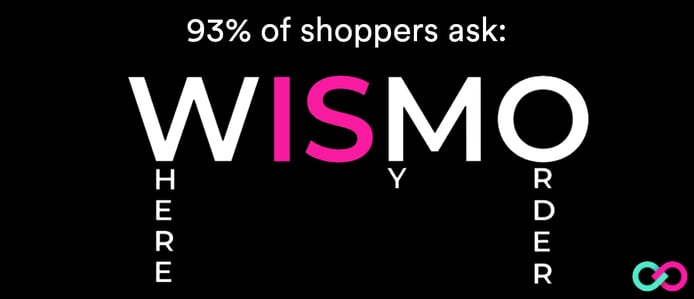
WISMO — "Where Is My Order?" — is the single most expensive question in e-commerce. Every time a customer picks up the phone, opens a chat, or fires off an email asking about their order status, it costs your support team time, your operations budget money, and your brand a measurable portion of customer loyalty. In 2026, with delivery expectations continuing to accelerate, WISMO has evolved from an inconvenience into a critical business metric that directly predicts churn, repeat purchase rate, and net promoter score.
This guide covers everything operations managers and e-commerce teams need to know: what WISMO means, why it happens, what it actually costs, and the specific multi-channel notification strategy that eliminates up to 40% of WISMO contacts before they ever reach your support team.
🗝 Key Takeaways
- WISMO stands for "Where Is My Order?" and represents 40–60% of all inbound e-commerce support contacts — making it the single largest category of avoidable customer service workload for most online retailers.
- The average WISMO contact costs between £4.50 and £8.00 to handle — at scale, a brand receiving 500 WISMO contacts per week spends between £117,000 and £208,000 per year on entirely preventable support interactions.
- Proactive multi-channel notifications — email, WhatsApp, and SMS — reduce WISMO contacts by approximately 40% when sent at the right delivery milestones before the customer has time to wonder where their order is.
- The root cause of WISMO is not slow shipping — it's the communication gap between dispatch and delivery. Customers who receive timely, accurate updates rarely contact support regardless of delivery speed.
- A branded tracking page with embedded marketing reduces WISMO while generating revenue — customers who visit a well-designed tracking page during the anticipation window convert at measurably higher rates than cold traffic.
📋 In this article
- WISMO Meaning: The Definition and Why It Matters
- The Real Cost of WISMO Contacts at Scale
- Why WISMO Happens: The Communication Gap
- How to Reduce WISMO: The Multi-Channel Notification Strategy
- The Branded Tracking Page: Converting WISMO into Revenue
- Proactive Failed Delivery Recovery: WISMO Before It Starts
- How to Measure and Track Your WISMO Rate
- WISMO Reduction Tools: What to Look For in 2026
WISMO Meaning: The Definition and Why It Matters
WISMO is an acronym for "Where Is My Order?" — the question that customers ask when they don't know where their shipment is, when it will arrive, or what has happened since they placed an order. The acronym has become standard shorthand across e-commerce operations, logistics, and customer service teams because the problem it describes is so consistent and so commercially significant across every category and geography.
WISMO contacts occur across every support channel: phone, email, live chat, social media DMs, WhatsApp, and even negative reviews on marketplaces. The underlying trigger is always the same — a communication gap that leaves the customer without timely, accurate information about their order status. The customer is not being unreasonable when they ask. The fault lies entirely in the post-purchase notification strategy, or the absence of one.
WISMO vs WISMR: Understanding Both Acronyms
WISMR — "Where Is My Return?" — is the post-purchase equivalent that surfaces when customers initiate a return and lose visibility of the returns process. WISMR contacts follow the same pattern as WISMO: a communication gap, customer anxiety, support contact, avoidable cost. Both are symptoms of the same underlying problem: insufficient proactive communication across the post-purchase journey. An effective returns management platform with automated status notifications addresses WISMR in the same way a multi-channel notification strategy addresses WISMO.
Why WISMO Has Intensified in 2026
Three forces have made WISMO more acute in 2026 than at any previous point in e-commerce history. First, delivery speed expectations have been reset permanently upward — customers who experienced next-day and same-day delivery during peak demand periods now treat 2 to 3 day delivery as the acceptable baseline, and anything longer triggers anxiety faster. Second, the proliferation of mobile shopping means customers are checking their devices repeatedly throughout the day, making the absence of a tracking notification more conspicuous than it was on desktop-first commerce. Third, the growth of WhatsApp as the dominant personal messaging channel in Europe — reaching 91% penetration in Spain, 85% in Italy, 80% in France, and 79% in Germany — means customers now expect commercial communications in the same app they use for personal conversations, at the same speed.
Brands that classify WISMO as a "support cost to manage" rather than a "revenue signal to act on" consistently underinvest in post-purchase communication. The data is unambiguous: customers who contact support about order status are 3× more likely to leave a negative review and 2.5× less likely to make a repeat purchase within 90 days than customers who received proactive tracking updates. WISMO reduction is not a support team efficiency initiative — it is a customer retention and lifetime value initiative.

The Real Cost of WISMO Contacts at Scale
Most e-commerce teams dramatically underestimate what WISMO actually costs because they only count the direct support handling time. The true cost of a WISMO contact has four components: direct support cost, indirect brand damage, lost repeat purchase revenue, and the operational time diverted from proactive problem-solving to reactive fire-fighting.
| WISMO Cost Component | Low Estimate | High Estimate | Notes |
|---|---|---|---|
| Direct support handling cost per contact | £4.50 | £8.00 | Phone contacts higher; live chat lower |
| Customer churn rate increase after WISMO contact | +12 % | +25 % | Vs. customers who received proactive updates |
| Negative review likelihood | 3× baseline | 5× baseline | Especially after failed delivery attempt |
| WISMO contacts as % of total support volume | 35 % | 60 % | Varies by carrier mix and notification strategy |
| Annual cost at 500 WISMO contacts/week | £117,000 | £208,000 | Direct cost only — excludes churn impact |
| Annual cost savings at 40% WISMO reduction | £46,800 | £83,200 | Multi-channel proactive notification impact |
The calculation becomes even more compelling when repeat purchase revenue is included. If the average customer lifetime value is £200 and a WISMO contact increases churn probability by 15%, each WISMO contact destroys an expected £30 of future revenue — on top of the £4.50 to £8.00 direct handling cost. At 500 contacts per week, the combined impact exceeds £890,000 per year in direct cost plus lost future revenue.
Why WISMO Happens: The Communication Gap
WISMO does not happen because shipping is slow. It happens because customers lose visibility after the confirmation email. Research consistently shows that customers who receive timely, accurate tracking updates accept significantly longer delivery windows without contacting support — the communication itself manages the anxiety, regardless of whether it changes the delivery timeline.
The communication gap follows a predictable pattern. An order confirmation email is sent immediately after purchase — this is nearly universal. A dispatch notification is sent when the carrier collects — this is common but inconsistent. Everything after dispatch is where the gap appears. Carrier tracking pages are generic, unbranded, and require the customer to already know what they're looking for. Intermediate status updates — "your parcel is at the sorting hub", "your parcel is on the van for delivery" — are either absent or arrive as impersonal carrier text messages with no brand context. And when something goes wrong — a failed delivery attempt, a delay, a customs hold — the customer is the last to know.
The Six Moments Where WISMO Risk Is Highest
Understanding when customers are most likely to initiate a WISMO contact allows brands to target their notification strategy precisely. WISMO risk peaks at six specific moments in the post-purchase journey:
Customers who don't receive a dispatch notification within 24–48 hours of ordering begin to wonder if the order was processed. This is the first WISMO window, and it's entirely avoidable with a same-day dispatch email or WhatsApp message.
Once a parcel enters the carrier network, customers with no update assume something has gone wrong. An "in transit" update with estimated delivery date eliminates this contact window entirely.
Customers waiting at home for a parcel who haven't been told it's on the way that morning will contact support to confirm. A morning "out for delivery" WhatsApp or SMS cuts this contact to near zero.
This is the highest-risk WISMO moment. A failed delivery attempt with no customer notification generates immediate, frustrated support contact — often followed by a negative review regardless of outcome.
When a customer's expected delivery window closes without a delivery or an explanation, support contact is almost certain. Proactive delay notifications — sent before the window closes — convert this from a frustrated contact into an accepted update.
A "delivered" confirmation notification closes the loop for the customer and is the natural trigger point for a review request — the moment of highest satisfaction, when the parcel is in hand.
How to Reduce WISMO: The Multi-Channel Notification Strategy
Effective WISMO reduction in 2026 is not about sending more emails. It is about reaching customers on the channel they actually use, at the exact milestone where their anxiety peaks, with information specific enough to answer their question before they have to ask it. This requires a multi-channel notification strategy that covers email, WhatsApp, and SMS — with WhatsApp as the primary channel in markets where penetration is above 75%.
The Six Notifications That Eliminate WISMO
These six notifications, sent via automated shipping notification software, cover every WISMO risk window identified in the previous section. Each notification should be sent on the channel the customer is most likely to see first — which in most European markets means WhatsApp or SMS for time-sensitive delivery-day updates and email for confirmation and summary communications.
| Notification | Trigger Event | Primary Channel | WISMO Window Eliminated |
|---|---|---|---|
| 1. Dispatch confirmation | Label created / carrier collected | Email + WhatsApp | Day 1–2 "was my order processed?" contacts |
| 2. In transit update | Parcel scanned at first hub | Day 2–3 "is it moving?" contacts | |
| 3. Out for delivery alert | Parcel loaded on delivery van | WhatsApp / SMS | Delivery day "is it coming today?" contacts |
| 4. Pre-attempt availability check | 24h before estimated delivery | WhatsApp / SMS | Failed delivery attempts + post-failure contacts |
| 5. Delay notification | Expected window at risk | Email + WhatsApp | "It was supposed to arrive yesterday" contacts |
| 6. Delivery confirmation + review request | Carrier marks delivered | Email + WhatsApp | Post-delivery "did it arrive?" contacts + review generation |
Email open rates for transactional messages average 45–55%. WhatsApp message open rates average 98%, typically within 3 minutes of receipt. For the two most time-sensitive WISMO notifications — "out for delivery" and "pre-attempt availability check" — WhatsApp or SMS is the only channel that delivers the information quickly enough to be actionable. A customer who reads "your parcel is being delivered today" at 7am has the opportunity to arrange to be home. The same message read at 6pm in an email is useless.
What Each Notification Must Contain
Effective WISMO-reduction notifications are specific, not generic. A notification that says "your order is on its way" reduces anxiety less than one that says "your order #12345 (Blue Linen Shirt, size M) is with DHL and expected to arrive Tuesday 14 May between 10am and 2pm." The specificity of the information — order reference, item description, carrier name, delivery window — is what makes the notification genuinely informative rather than merely a reassurance that something is happening.
Every notification should include: the order reference number; the carrier name and tracking number with a direct link to the branded tracking page; the specific delivery status and what it means in plain language; the expected delivery date and window where available; and a direct link to support if the customer has a question. The Track & Trace platform aggregates status data from 190+ carriers into a single unified view, ensuring notification accuracy regardless of which carrier is handling the shipment.
The Branded Tracking Page: Converting WISMO into Revenue
Every customer who checks their order status is in the highest-intent browsing state they will be in between purchase and next purchase. They are engaged with your brand, actively thinking about their relationship with you, and already on a device. This is the single most underused revenue opportunity in e-commerce post-purchase strategy.
A generic carrier tracking page — DHL's, Evri's, or Royal Mail's — captures this moment for the carrier's brand, not yours. It may show advertising for competitor products. It provides no opportunity for cross-sell, upsell, review collection, loyalty programme engagement, or next-purchase incentive. A branded tracking page, served on your domain with your design, keeps this entire moment within your brand ecosystem.
What a High-Performing Branded Tracking Page Contains
The most effective branded tracking pages in 2026 contain five elements beyond the tracking status itself: a personalised product recommendation block based on the items in the current order; a loyalty programme or discount prompt timed to the delivery day ("your next order gets 10% off — use code THANKYOU"); a review request pre-loaded for after delivery confirmation; a returns portal link for immediate post-purchase returns; and a WhatsApp opt-in for future order notifications. ShippyPro's branded tracking page supports all of these elements with no-code customisation, applying them across all carriers in the connected network from a single configuration.
Customer clicks the tracking link from an unbranded email. Lands on DHL's website in DHL's design. Sees DHL's advertising. Finds a status message that says "In transit — expected delivery: between Monday and Friday." Has no way to ask a question, update delivery preferences, or interact with your brand. Returns to Google. Contacts your support team anyway.
Customer clicks the tracking link from a WhatsApp notification. Lands on your branded tracking page with their order details, carrier status in plain language, and an accurate delivery window. Sees a personalised product recommendation. Gets a 10% off code for their next order. Clicks to opt in to WhatsApp notifications for future orders. Never needs to contact your support team.
Proactive Failed Delivery Recovery: Preventing WISMO Before It Starts
Failed delivery attempts are the most expensive WISMO trigger. They generate a support contact almost universally, frequently result in a negative review, and create a logistical loop — redelivery attempt, second possible failure, return to depot, customer complaint — that compounds cost at every step. In markets where carriers operate on a single-attempt model — including most EU domestic carriers — a single missed delivery attempt can trigger the entire returns and redelivery cycle.
The solution is proactive pre-delivery communication that eliminates the missed attempt before it happens. A WhatsApp or SMS message sent 24 hours before the expected delivery date — "Your order is arriving tomorrow between 10am and 2pm. Is someone available? Click here to reschedule or redirect to a pickup point" — gives the customer the control they need and the carrier the information it needs to complete delivery successfully. Proactive pre-delivery notifications reduce failed first-attempt delivery rates by 20–25%, with the strongest effect in urban markets where customers are frequently out during working hours.
Redirecting to Pickup Points: The WISMO Elimination Play
The most effective failed delivery prevention strategy is giving customers the option to redirect their delivery to a nearby pickup point before the first attempt. This is only possible when the notification system is integrated with the carrier network at the API level — so that a customer's pickup point selection in the tracking page or notification link is communicated back to the carrier in time to affect the routing. ShippyPro's Ship & Collect module enables pickup point selection at checkout and rerouting via the tracking page across all supported carriers, converting a potential failed delivery into a successful pickup point collection.
How to Measure and Track Your WISMO Rate
Before reducing WISMO, you need to measure it accurately. Most e-commerce teams track total support ticket volume but do not tag WISMO contacts separately, making it impossible to assess the impact of notification improvements. A correct WISMO measurement framework requires four metrics tracked weekly.
| WISMO Metric | Definition | Target Benchmark | How to Measure |
|---|---|---|---|
| WISMO contact rate | WISMO contacts ÷ total shipments × 100 | < 2 % (world-class: < 0.5 %) | Tag all WISMO-related tickets in helpdesk |
| WISMO % of total support | WISMO tickets ÷ total tickets × 100 | < 30 % | Weekly helpdesk category report |
| Notification open rate by channel | Opens ÷ sends × 100 per channel | Email >45 %; WhatsApp >85 % | Notification platform analytics |
| Tracking page visit rate | Tracking page visits ÷ shipments × 100 | > 60 % (benchmark for engagement) | Analytics on branded tracking page URL |
The WISMO contact rate is the primary metric. A rate above 5% indicates a serious notification gap. A rate between 2% and 5% indicates an adequate system with room for significant improvement. A rate below 1% indicates a mature, multi-channel proactive notification strategy. The Optimizer® analytics module provides carrier-level exception heatmaps that identify which carriers and routes generate the most WISMO contacts, enabling targeted notification improvements where they have the greatest impact.
WISMO Reduction Tools: What to Look For in 2026
Not all shipping notification tools are equal, and the differences between them have a direct impact on WISMO reduction outcomes. When evaluating a solution for 2026, these are the capabilities that determine whether a tool genuinely reduces WISMO or simply adds another notification layer on top of an existing gap.
Multi-Carrier Tracking Aggregation
A WISMO reduction tool must pull tracking data from every carrier in your network into a single unified view — not just the two or three carriers it was originally built for. A platform that covers 190+ carriers via a single API integration ensures that notification accuracy is consistent regardless of whether a shipment is with DHL, Royal Mail, Evri, BRT, or any other carrier in the network. Patchwork integrations — where some carriers update in real time and others lag by 12 or 24 hours — create exactly the information gaps that WISMO contacts exploit.
WhatsApp as a Native Channel (Not a Third-Party Add-On)
WhatsApp notification capability should be native to the platform — not routed through a third-party connector that adds latency, adds cost, and adds a failure point. In 2026, WhatsApp is the primary post-purchase communication channel in most European markets. A platform that treats it as an optional add-on is not built for the current reality of customer communication. ShippyPro includes WhatsApp notifications natively in the Pro plan, sending automated messages at configured delivery milestones without requiring separate account setup or per-message billing above the included volume.
Branded Tracking Page with No-Code Customisation
The branded tracking page should be configurable without developer involvement. Marketing teams need to be able to update product recommendations, promotional blocks, review prompts, and design elements on their own cadence — not on a development sprint cycle. A no-code tracking page editor is the practical difference between a tracking page that reflects current promotions and one that shows last quarter's offers.
Proactive Exception Detection
The most commercially valuable WISMO reduction capability is one that most platforms do not offer: automatic detection of delivery exceptions — delays, failed attempts, customs holds — before the customer notices them, triggering a proactive outbound notification rather than waiting for an inbound WISMO contact. This requires real-time carrier data polling and configurable exception rules. ShippyPro's Track & Trace platform monitors all active shipments continuously and triggers exception notifications automatically when a status deviation is detected — turning the most expensive WISMO trigger into a proactive brand communication.
Track & Trace
Real-time tracking across 190+ carriers in a single dashboard. Proactive exception detection, automatic status notifications, and full carrier data aggregation — the foundation of an effective WISMO reduction strategy.
Explore Track & Trace →Shipping Notifications
Multi-channel automated notifications — email, WhatsApp, and SMS — triggered at every delivery milestone. WhatsApp included natively in the Pro plan with no third-party connector required.
Explore Shipping Notifications →Ship & Collect
Pickup point selection at checkout and delivery rerouting via the tracking page — the most effective tool for eliminating failed first-attempt deliveries before they generate a WISMO contact.
Explore Ship & Collect →Shipping Notifications for Ecommerce: How to Turn Delivery Updates Into a Growth Engine
The complete 2026 guide to ecommerce shipping notifications — the 4 essential notification types, multi-channel channel strategy, WISMO reduction benchmarks, and how to set up multi-carrier notifications with ShippyPro.
Read the Guide →The 2026 Shipping Automation Playbook: 5 High-Impact Actions to Build Now
The five shipping automation workflows with the highest measurable ROI in 2026 — including proactive WISMO prevention, carrier routing rules, and the automation sequence that cuts support ticket volume fastest.
Read the Playbook →Shipping Automation: What to Automate First (and Why the Order Matters)
Most brands automate in the wrong order and see poor results. This guide covers the correct sequencing — starting with WISMO-prevention notifications before moving to carrier routing, returns, and invoice automation.
Read the Guide →What does WISMO stand for?
WISMO stands for "Where Is My Order?" — the question customers ask when they don't know the status of their shipment. It has become standard industry shorthand because the problem it describes is consistent across every e-commerce category and geography: a communication gap between dispatch and delivery that leaves customers without the information they need, causing them to contact support. WISMO contacts typically represent 40 to 60% of all inbound customer service volume for online retailers without a proactive notification strategy in place.
How much do WISMO contacts cost per ticket?
The direct handling cost of a WISMO contact ranges from approximately £4.50 for a live chat interaction to £8.00 or more for a phone call, depending on team location and support model. However, the true cost is significantly higher when repeat purchase impact is included: customers who contact support about order status are measurably less likely to make a repeat purchase within 90 days and significantly more likely to leave a negative review. At 500 WISMO contacts per week, the direct cost alone runs between £117,000 and £208,000 per year — before accounting for the churn impact.
What is the most effective way to reduce WISMO contacts?
The most effective WISMO reduction strategy is proactive multi-channel notification — sending customers accurate status updates at the specific milestones where their anxiety peaks, before they have time to contact support. This means a dispatch confirmation (email and WhatsApp), an in-transit update (email), an out-for-delivery alert (WhatsApp or SMS on the morning of delivery day), a pre-attempt availability check (WhatsApp or SMS 24 hours before expected delivery), a delay notification if the window is at risk (email and WhatsApp), and a delivery confirmation with review request (email and WhatsApp). Brands implementing all six notifications with WhatsApp as the primary real-time channel consistently reduce WISMO contacts by approximately 40%.
What is the difference between WISMO and WISMR?
WISMO stands for "Where Is My Order?" and refers to support contacts during the outbound delivery journey. WISMR stands for "Where Is My Return?" and refers to the equivalent contacts during the returns process — when customers who have initiated a return lose visibility of its status. Both are symptoms of the same underlying problem: insufficient proactive communication leaving customers without the information they need. An effective returns portal with automated status notifications addresses WISMR in the same way a multi-channel delivery notification strategy addresses WISMO.
Does a branded tracking page actually reduce WISMO contacts?
Yes — significantly. A branded tracking page reduces WISMO contacts through two mechanisms. First, it provides a self-service channel where customers can check their order status on demand without contacting support, as long as the page is promoted clearly in every notification. Second, a well-designed branded tracking page with clear status information, plain-language explanations of carrier status codes, and a direct support link converts customers who might otherwise contact support into self-service users. The additional commercial benefit — product recommendations, next-order discounts, review requests — makes the branded tracking page one of the highest-return investments in post-purchase strategy.
Stop answering "Where is my order?" — start preventing it.
ShippyPro's multi-channel notification suite — email, WhatsApp, and SMS — covers every WISMO risk window across 190+ carriers. Branded tracking page, proactive exception alerts, and automatic review prompts included. Reduce WISMO contacts by approximately 40% from day one.

ShippyPro is the complete shipping software for online and offline retail. With Label Creator, Track & Trace, Easy Return and Analytics features, our software simplifies your shipping operations. ShippyPro integrates with over 180 carriers and 80 sales channels, making it compatible with a wide range of products and use cases.