



 By
·
14 minute read
By
·
14 minute read
A delivery delay happens to every e-commerce store at some point. A courier hits capacity during peak season, a customs form has a missing field, bad weather grounds flights for 48 hours and as a result the parcel sits and waits. The customer waits and this has a direct impact on your reputation. What separates the shops that lose buyers over a single late delivery from the ones that convert the same incident into a loyalty moment is having a clear process for what to do before, during and after a shipment goes late. This article delves into what this process looks like and how you can manage it without losing the customer.

🗝 Key Takeaways
- Delays are structural, not exceptional: Peak season surges, customs holds, address errors and carrier capacity issues create predictable windows of risk that you can plan around.
- Proactive communication is the single biggest factor in whether a late delivery damages your brand or strengthens it. Customers who are informed before they have to ask are far more forgiving.
- A multi-carrier strategy reduces vulnerability: Relying on one carrier means one point of failure while connecting multiple carriers gives you real-time rerouting options when one network slows down.
- Your customer service script matters: A clear, empathetic response with a concrete next step retains more customers than a refund alone. Acknowledge, explain briefly, act and follow up.
- Automation closes the gap: Automated tracking notifications and carrier switching rules mean most late-delivery situations can be handled without manual intervention per order.
📋 In this article
What Counts as a Delivery Delay?
A delivery delay occurs when a shipment takes longer than the estimated transit time shown to the customer at checkout. On a tracking page, this typically surfaces as statuses like "in transit longer than expected," "delayed," or a simple absence of any new scan events for an unusual length of time.
It is worth distinguishing between two types of delay, because they require different responses. The first is a carrier-side delay: the parcel left your warehouse on time but something in the network slowed it down. Weather, volume surges, a missed connection, or a failed delivery attempt all fall into this category. The second is a merchant-side delay: the order was shipped late due to a fulfilment issue, a missing label, or a warehouse cutoff miss. Customers rarely care which type it is. They care that their parcel has not arrived.
The 24-hour rule
A useful internal benchmark: if a shipment has not received a new carrier scan within 24 hours of the last expected scan event, treat it as a potential delay and begin your monitoring process. Do not wait for the customer to contact you first. By the time they do, frustration is already high.
The Most Common Causes of Late Shipments
Understanding the root cause of a delay determines the right fix. Most delivery delays cluster into a handful of categories:
Address and order data errors
Incorrect or incomplete shipping information is one of the leading causes of failed first-attempt deliveries and return-to-sender parcels. A missing flat number, a misspelt street name, or an invalid postcode causes the carrier to halt the shipment while they attempt verification. The fix for this starts at checkout: automated address validation tools catch most errors before the label is printed, removing a large share of preventable delays from the equation.
Carrier capacity constraints and peak season surges
During Black Friday, the Christmas peak, and increasingly around major sale events, carrier networks exceed normal throughput. Parcels queue in depots for one to three days beyond the standard transit time. This is the most predictable category of delay, and also the one stores are most often underprepared for. A multi-carrier shipping platform lets you redistribute volume across carriers before a single network hits its limit.
Weather, strikes and external disruptions
Snowstorms, floods, wildfires and transport strikes can halt routes entirely. Carriers typically issue service alerts in advance of known disruptions. Subscribing to those alerts and building a communication template for force-majeure delays means you can notify customers within hours as opposed to days.
Customs clearance holds
International shipments face a category of delay that domestic parcels do not. A missing or incorrect field on a customs declaration can put a shipment in a hold queue for several days. According to guidance from the European Commission's customs authority, the most common documentation errors involve incorrect HS codes, missing EORI numbers and mismatches between declared value and commercial invoice value. Getting customs documentation right at the point of dispatch removes most international delay risk at source.
First-attempt delivery failures
When a recipient is not at home during the delivery window, most carriers reattempt delivery the next working day or hold the parcel at a depot for collection. This adds at least 24 hours and sometimes 48-72 hours to the effective delivery time. Offering out-of-home delivery options (parcel lockers, pick-up points) at checkout reduces first-attempt failures substantially, because the recipient chooses a location where collection is always possible.
Warehouse and fulfilment bottlenecks
Missed carrier cutoff times, manual label creation slowing dispatch and last-minute order edits are merchant-side causes of delay that often go unlogged as "delays" but have the same result. Integrating your store directly with your shipping platform so that orders flow automatically to label printing removes this friction.
If your team does not dispatch before the carrier's daily collection cutoff, that order will not leave your warehouse until the following working day. During peak season, when carriers may have earlier-than-usual cutoffs, this single operational gap compounds quickly across hundreds of orders. Map your carrier pickup times explicitly and build a dispatch buffer of at least 90 minutes before each cutoff.
What a Late Delivery Actually Costs You
It is tempting to treat a delivery delay as a logistics inconvenience. In practice, it is a customer experience event with measurable commercial consequences.
| Consequence | What the research shows | Typical trigger |
|---|---|---|
| Customer contacts support | "Where is my order?" (WISMO) is the most common e-commerce support ticket category | No proactive update after expected delivery date |
| Negative review | Customers are 2-3x more likely to leave a review after a bad delivery experience than a good one | No communication + no resolution offered |
| Refund or dispute request | Chargeback rates climb when delivery exceeds expected date by more than 5 days | Parcel in limbo with no carrier update |
| Lost repeat purchase | 67.5% of online shoppers say they will not return to a store that misses its delivery promise (Sendcloud Peak Season Index 2025) | Delay handled poorly or with no follow-up |
| Retained loyalty | 78% of customers will forgive a bad experience if the brand handles recovery well (Zendesk 2025) — a well-handled delay can produce a more loyal customer than a smooth delivery with no standout communication | Delay handled proactively with empathy |
The last row is the most important. Research on service recovery consistently shows that customers whose complaints are handled well often end up more loyal than those who never experienced a problem at all. The caveat is execution: a generic, delayed, or insincere response makes things worse. Done right, a delay becomes one of the few moments in a customer relationship where you can demonstrate you actually care.
Customer emails to ask where their order is. You check the carrier portal manually, realise it has been stuck for 3 days, send a generic apology and offer a refund only when the customer pushes for one. They leave a 2-star review mentioning the wait and the lack of communication.
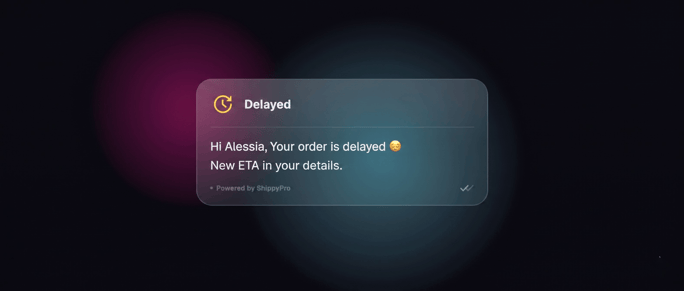
Your tracking system flags the parcel as stalled 24 hours after the expected scan. An automated update goes to the customer with a revised estimate and a direct apology. Your team follows up with a discount code for their next order. The customer replies saying they appreciate the transparency.
What to Do the Moment You Spot a Delay
Speed matters here. The window between when a delay first appears in tracking data and when a customer sends an angry email can be as short as a few hours. Here is the operational sequence to follow:
Log into your carrier portal or tracking dashboard and find the last scan event. Note the location, the time elapsed since that scan and whether the carrier has flagged any service disruption for that route or region.
Open a trace request with the carrier. Provide the tracking number, the origin and destination, and the date of dispatch. Ask for a status update and an estimated resolution time. Keep a record of the case number they provide.
Determine whether this is an isolated single-parcel issue (lost, misrouted) or a systemic delay affecting a route, region, or carrier service. If systemic, you likely have multiple affected shipments and need to batch-communicate with all affected customers simultaneously.
Send a proactive update (see the next section for exactly what to say). This single step reduces inbound support volume for delayed orders by a substantial margin, because customers who already know what is happening.
Log the delay, its cause (where known), the carrier, the route and the resolution outcome. Over time, this data reveals patterns: specific carrier services that consistently underperform on certain routes, or recurring address issues from a particular checkout flow.
How to Communicate With the Customer During a Delivery Delay
The message you send matters as much as the timing. Customers handle bad news well when they feel respected and informed, as opposed to being sent a generic template. A good framework for every stage of the communication should include:
The first notification: before they ask
Send this as soon as you confirm the delay, ideally by email with an SMS follow-up for high-value orders. The message should include: an acknowledgement that the delivery is running late, a brief and honest reason (if known), a revised estimated delivery date (or a statement that you are investigating), and a direct contact point if they have questions.
The follow-up: if the delay extends
If 48 hours pass without resolution after your first message, send a second update. Include whatever new information you have from the carrier, confirm whether a reship is being arranged, and reiterate your commitment to resolving it. If the parcel appears lost at this point, move to a replacement or refund conversation without waiting for the customer to demand one.
The resolution message: closing the loop
Once the parcel is delivered or a replacement has shipped, send a brief message confirming delivery and acknowledging that the experience was not what it should have been. This is the moment to include a goodwill gesture: a discount code for their next order, free shipping on the next purchase, or a small credit. The cost of that gesture is almost always lower than the cost of acquiring a replacement customer.
Write your "parcel delayed," "delay extended," and "resolved" email templates during a calm period. Include merge fields for order number, carrier name, tracking link, and revised delivery date. When an actual delay hits during a peak period, you want to be filling in fields, not writing copy under pressure. Review and update the templates once per quarter to keep the tone fresh.
What not to say
Avoid vague phrases like "your order is on its way" when you know it is stalled. Customers who receive that message and then check tracking to find no movement feel misled, which compounds the original frustration. If you do not yet have a firm revised date, say so honestly. "We are investigating with the carrier and will update you within 24 hours" is more trustworthy than a false estimate.
Handling the angry customer
When a customer contacts you already frustrated, the sequence that works is: acknowledge first (do not jump straight to solutions), then explain briefly without making excuses, then offer a concrete next step.
How to Prevent Delivery Delays Before They Happen
Reactive handling is essential, but the stores with the best delivery track records invest heavily in prevention. Most high-frequency delay causes are preventable with the right operational setup.
Validate addresses at checkout
Integrate an address validation tool directly into your checkout flow. This catches misspellings, invalid postcodes and missing fields before the order enters your fulfilment queue. The improvement in first-attempt delivery rates is typically significant and it removes a category of support ticket almost entirely.
Build a multi-carrier strategy
Connecting multiple carriers through a single shipping platform means you can switch volume away from an underperforming network quickly. During a strike or a capacity crunch, having a second and third carrier option moves from "nice to have" to "operationally critical." The key is setting this up before the disruption occurs, not during it.
Set carrier routing rules by shipment type
Not all shipments need the same carrier. Time-sensitive orders may warrant an express service even at higher cost. Bulky items may be better suited to a specialist carrier. Defining automated routing rules that match shipment attributes to the right carrier removes a layer of manual decision-making and reduces the risk of using an inappropriate service for a given parcel.
Communicate realistic delivery estimates
Overpromising at checkout is a root cause of customer disappointment that has nothing to do with the carrier. If your standard service takes 3-5 working days and you show "2-3 days" to win the conversion, you are setting up a support conversation for every order that lands on day 4. Show accurate estimates, and during known risk periods (peak season, carrier disruptions) add a visible buffer.
Set up proactive tracking notifications
Automated delivery notifications sent at each key tracking event (dispatched, out for delivery, delivered, failed attempt) dramatically reduce WISMO support tickets. They also create natural intervention points: if a "failed delivery attempt" notification goes out automatically, the customer can immediately arrange redelivery without having to contact you. ShippyPro's Track & Trace module handles this across all connected carriers from a single configuration.
For cross-border shipments, incomplete or incorrect customs declarations are one of the most common causes of multi-day holds. Check that your commercial invoices include the correct HS code for each product, the accurate declared value, and a valid EORI number for the exporting entity. Errors caught at the border can add 3-7 working days to transit. For EU sellers, guidance is available from the European Commission customs authority.
Review carrier performance quarterly
Use your shipping data to build a carrier performance scorecard: on-time delivery rate by service, by route, and by weight band. If a specific carrier consistently underperforms on a route, shift volume or escalate the performance data with your account manager. Carriers with business volume commitments have incentives to resolve systematic issues when you present them with data.
| Prevention area | Action | Delay types prevented | Complexity to implement |
|---|---|---|---|
| Address validation | Add validation at checkout and label generation | Failed delivery attempts, return-to-sender | Low |
| Multi-carrier setup | Connect 2-3 carriers, define fallback rules | Network capacity, carrier strikes | Medium |
| Automated routing rules | Match shipment type to correct service automatically | Wrong service selected, cutoff misses | Medium |
| Tracking notifications | Automate updates at each scan event | WISMO tickets, failed redelivery | Low |
| Customs documentation | Validate all fields before dispatch for cross-border orders | Customs holds, international delays | Medium |
| Delivery estimate accuracy | Show carrier-specific transit times at checkout | Expectation mismatches, complaints | Low |
| Carrier performance review | Score carriers quarterly by route and service level | Systematic underperformance going unaddressed | Low (with shipping data) |
Using Technology to Stay Ahead of Delivery Delays
Manual monitoring of shipping exceptions at any meaningful order volume is not viable. The operational overhead is too high, and the response time too slow. Technology closes that gap in five ways.
Centralised multi-carrier tracking
When all your carrier tracking data flows into a single dashboard, you see exceptions across your entire shipment volume in one view rather than logging into four different carrier portals. You can filter by status, carrier, route, or date range, and build alert rules that surface at-risk shipments automatically. The ShippyPro Track & Trace feature does exactly this, surfacing delay events across all connected carriers so you can act on them before customers notice.
Automated shipping rules and carrier switching
Once you have defined your carrier routing rules, AI-powered shipping automation can apply them at scale: routing orders by weight, destination, service level, and cost without manual intervention. During a disruption, rules can be updated centrally to reroute all new orders away from an affected carrier service. What would take hours of manual reassignment happens in minutes.
Returns management as part of the delay response
When a delay turns into a lost parcel and the customer requests a replacement or refund, having a clean returns process matters. A disorganised returns flow compounds an already negative experience. A dedicated returns management system like ShippyPro Easy Return that lets customers self-serve a return label removes friction from the resolution stage and keeps the interaction positive even when the original shipment did not go to plan.
Carrier invoice analysis
One underused tool in the delay-management toolkit is carrier invoice auditing. Carriers frequently charge for services not delivered (premium next-day rates on parcels that arrived late, for example) or apply incorrect surcharges. Systematic invoice checking via a tool like ShippyPro Invoice Analysis can recover meaningful sums on a monthly basis, particularly for stores with high shipment volumes. That recovered spend can fund service upgrades or goodwill gestures for delayed orders.
Carrier performance analytics
Knowing a carrier is slow is one thing. Knowing exactly which routes, weight bands, and regions are underperforming and by how much is what lets you act on it. ShippyPro Optimizer gives you geo-localised shipping KPIs across all connected carriers: on-time rates, transit times by region, exception tracking broken down by reason, and cost analysis by service level. Rather than waiting for a pattern of complaints to alert you to a problem carrier, Optimizer surfaces it in the data first. That makes the quarterly carrier review described above considerably easier to run and gives you concrete numbers to bring to a carrier account conversation when performance needs addressing.
Most shipping platforms let you configure exception alerts based on tracking inactivity. Set a rule: if a shipment shows no carrier scan for 24 hours after the last expected event, trigger an internal alert. This catches potential lost parcels early, before the customer's expected delivery date passes, giving you time to open a carrier trace and communicate proactively. The earlier you catch a stalled shipment, the more options you have.
Track & Trace
Monitor all your shipments across every connected carrier in one view. Get automatic alerts for delayed or stalled parcels before customers ask.
Explore Track & Trace →AI Shipping Automation
Set routing rules that automatically assign the right carrier for each order type. Switch volume away from disrupted carriers in seconds, not hours.
See Automation →Easy Return
Give customers a self-serve return portal so delay resolutions stay clean and fast. Reduce friction at the exact moment brand trust is most fragile.
Discover Easy Return →Optimizer
Track on-time rates, transit times, and exceptions by carrier, route, and region. Spot underperforming carriers in the data before customers start complaining.
Explore Optimizer →Carrier Integrations
Connect DHL Express, FedEx, UPS, Royal Mail, Evri, and dozens more carriers to ShippyPro. A broader carrier network means better resilience when one service slows.
Browse Integrations →ShippyPro Resources
Guides, calculators, and how-tos to improve every part of your e-commerce shipping operation, from carrier selection to returns policy writing.
Visit the Hub →What should I do if a customer's parcel has had no tracking update for several days?
First, open a trace request directly with the carrier using the shipment tracking number and dispatch date. Most carriers have a business-account support channel with faster response times than their consumer helpline. At the same time, proactively notify the customer that you are investigating, give them a timeline for your next update (24-48 hours), and set a clear internal decision point: if no resolution comes back within that window, move to offering a replacement or refund without waiting for the carrier to formally declare the parcel lost. The sooner you make that call, the better the customer outcome.
Am I legally required to refund a customer for a late delivery?
In most jurisdictions, a seller is responsible for ensuring delivery within the timeframe agreed at checkout. In the EU and UK, consumer protection regulations generally entitle customers to remedies (re-dispatch or refund) if goods do not arrive within a reasonable or agreed time. In practice, offering a resolution proactively before a dispute is filed protects your reputation far more effectively than waiting for a formal complaint. Always check the specific regulations applicable in your market, particularly for distance selling and consumer rights. The EU consumer rights framework provides a useful reference point for cross-border sales within Europe.
How do I handle delivery delays during peak season without overwhelming my support team?
The most effective approach is to front-load communication so customers receive proactive updates before they need to contact you. Set up automated tracking notification emails that fire at each carrier scan event, including any delay status. Update your estimated delivery windows across your store and checkout pages to reflect peak-season carrier lead times before the peak begins. Prepare FAQ-style response templates for your support team covering the most common delay scenarios. If you use a multi-carrier setup, define in advance which carrier you will switch volume to if your primary carrier hits capacity, so the decision can be made quickly without a case-by-case review.
What is the difference between a delivery delay and a lost parcel, and when should I treat a delay as lost?
A delay means the parcel is still moving through the carrier network, just slower than expected. A lost parcel typically means the carrier has confirmed it cannot locate the shipment, or there has been no tracking movement for a period significantly beyond the standard transit window (often 10-15 working days depending on the carrier and service). Most carriers have an official "claim window" that opens after a defined number of days without movement, typically 10-15 business days for domestic services and 20-30 for international. However, you do not need to wait for a formal carrier declaration to act: if an order is clearly not going to arrive by any reasonable revised date, offer the customer a resolution and file the carrier claim in parallel.
Does a goodwill gesture (discount code, free shipping) actually help retain customers after a bad delivery experience?
Yes, when it is offered proactively and paired with a genuine acknowledgement. A discount code sent after a delay is already resolved signals that you took responsibility without being prompted. Research on service recovery suggests that customers whose complaints are handled well often show higher loyalty than those who experienced no problem at all, because the recovery creates a personal trust moment that routine transactions do not. Zendesk's 2025 customer experience data supports this: 78% of customers say they will forgive a bad experience when the brand's recovery is excellent. The key is timing: the gesture lands best when it accompanies the resolution message, not as a response to a complaint escalation.
Stop chasing delays. Start preventing them.
Connect all your carriers, automate tracking notifications, and catch at-risk shipments before your customers do. ShippyPro gives you one platform to manage every part of the shipping experience.


As Growth Manager at ShippyPro, I help ecommerce businesses optimize fulfillment, automate logistics workflows, and scale more efficiently. My work centers on the intersection of ecommerce operations, customer experience, and technology. I write about shipping innovation, automation, and the future of ecommerce logistics.